

In Mexico, death isn’t hidden away: it gets a place at the table. It’s offered bread, flowers, water and the favorite dishes of those who have passed, and it’s welcomed with music and candlelight. Day of the Dead may be the tradition that best explains the Mexican soul, and sharing it as a family is one of the most beautiful ways to pass it from one generation to the next. In Puerto Vallarta, it also has an accent all its own: here, memory is celebrated by the sea, with marigolds laid across the fishermen’s boats.
Here’s what each tradition means, how the city celebrates it in 2026 and which seasonal flavors neither you nor the little ones should miss.
The meaning of Day of the Dead
The tradition blends pre-Hispanic roots with the Catholic observances of All Saints’ Day and All Souls’ Day. According to popular belief, souls return each year to visit their families: children’s souls arrive on November 1 and adults’ souls on November 2. It isn’t a day of mourning, but of reunion.
The elements of the ofrenda
Every object on the altar has a purpose. The cempásuchil, or Mexican marigold, lights the way for souls with its color and scent. Candles illuminate their arrival and copal incense purifies the space. Water quenches their thirst after the long journey and salt offers protection. Papel picado, the cut-paper banners, represents the wind and the joy of the celebration. Photographs remind everyone who is being honored, and pan de muerto, sugar skulls and the loved one’s favorite dishes are the gifts the family prepares. Walking through an ofrenda with your kids and explaining what each element means is a simple way to make the tradition their own, too.
La Catrina, a Mexican icon
La Calavera Catrina was born from the work of engraver José Guadalupe Posada, who drew her to poke fun at people who put on airs of elegance that didn’t belong to them. Diego Rivera later gave her a name and her famous dress when he painted her in his mural at the Alameda Central. Today she is the face of Day of the Dead and a reminder of a very Mexican idea: in the face of death, we are all equal.
How Puerto Vallarta celebrates Day of the Dead in 2026
This year, Puerto Vallarta hosts the Festival de las Almas, Jalisco’s official Day of the Dead celebration, from October 31 to November 2, 2026. Under the theme "La Playa con Alma Mexicana" (The Beach with a Mexican Soul), the city offers more than 28 free experiences along the Malecón, in the Historic Center, at Los Arcos, on the Playa Los Muertos Pier, on Isla del Cuale and at the Casa de la Cultura. Since they’re free and outdoors, they make an ideal plan to explore as a family.
A seafaring identity: Las Pangas de Luz
Each festival host city honors a regional tradition, and Puerto Vallarta’s is its life by the sea. That’s why fishermen’s pangas covered in flowers will line the Malecón and light up at nightfall, in tribute to the people who founded the port.
La Guardiana del Océano
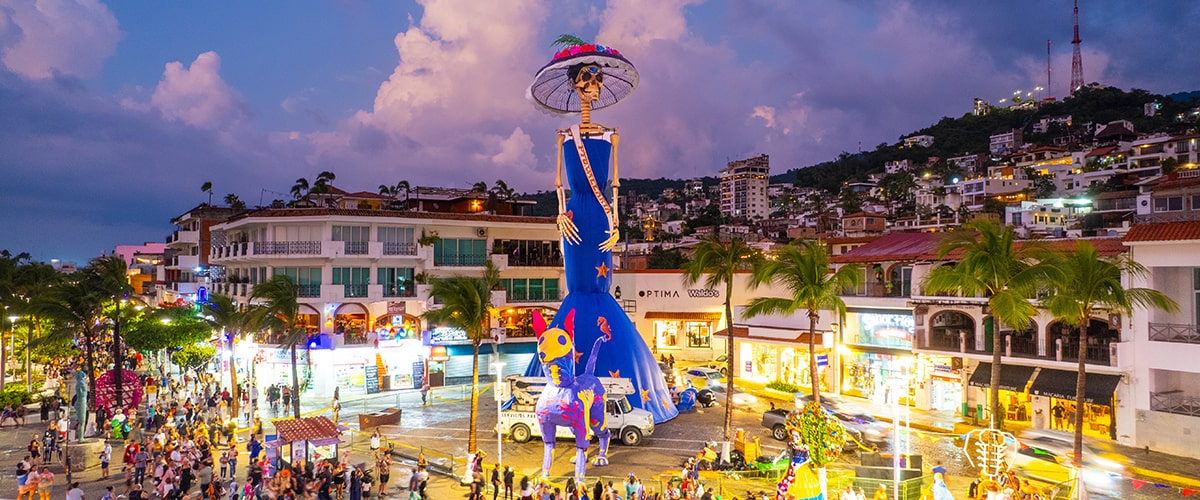
On the plaza by the Malecón lighthouse stands Puerto Vallarta’s monumental Catrina, reimagined each year by a Mexican artist. In 2026, La Guardiana del Océano (The Guardian of the Ocean) is adorned with waves, whales, manta rays and bougainvillea: a Catrina that is Vallarta through and through, and the must-have family photo of the season.
Altars, candles and legends
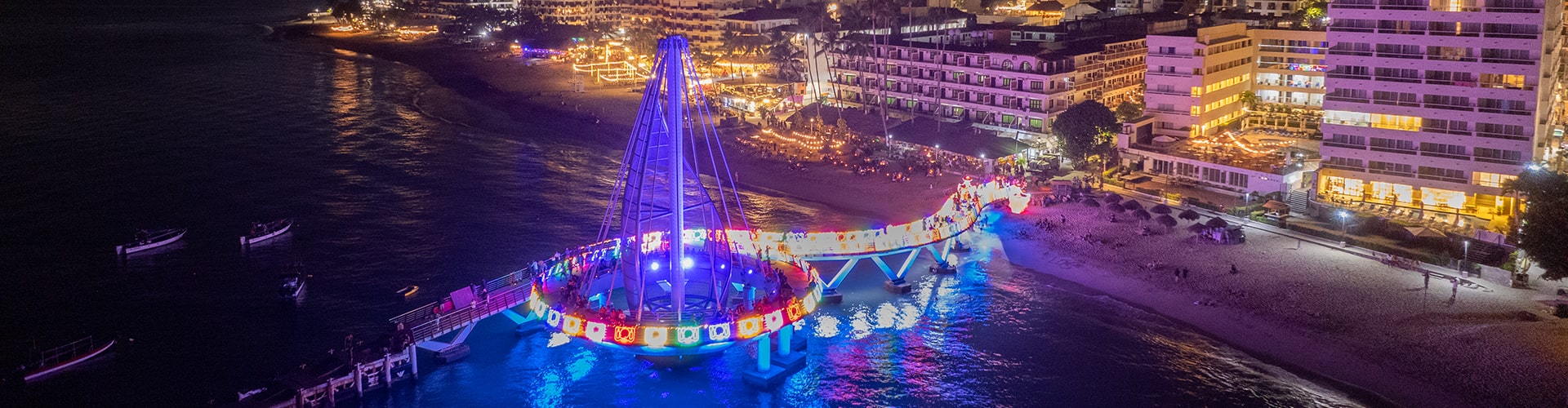
La Orilla de las Ánimas turns the Malecón into a corridor of marigolds, sculptures, music and ofrendas overlooking the ocean. Every sunset, La Hora Dorada de las Almas gathers the crowd for a candle-lighting ritual. On Isla del Cuale, El Jardín de los Susurros brings local legends back to life among copal, candles and shadows, while El Último Umbral traces a path of flowers and light toward the Faro de las Ánimas at the end of the Playa Los Muertos Pier.
La Marea de las Ánimas and the cemetery tradition
The festival’s grand parade will wind through the city in five themed worlds, led by catrines and catrinas dressed in the style of old Vallarta. Its date, time and route are still to be confirmed. Outside the official program, many local families keep the custom of visiting the Panteón 5 de Diciembre cemetery to clean and decorate the graves of their loved ones. If you visit, please do so with respect and discretion.
Seasonal Day of the Dead flavors
An ofrenda is also a table, and the season brings flavors that only appear these few days. Pan de muerto, scented with orange blossom and dusted with sugar, is enjoyed with hot chocolate or atole, a warm corn-based drink. Tamales, mole and calabaza en tacha, pumpkin slow-cooked with piloncillo and cinnamon, are classics on many altars, and sugar skulls are usually the kids’ favorite. Tasting them together is another way to understand the tradition. Look for these treats around Isla del Cuale, the Malecón and downtown.

Frequently asked questions
Travel guide
FREQUENTLY ASKED QUESTIONS
The Festival de las Almas in Puerto Vallarta runs from October 31 to November 2, 2026. The main days of the tradition are November 1 and 2.
Marigolds guide the souls, candles light their arrival, copal purifies, water quenches their thirst, salt protects, papel picado represents joy and the food, such as pan de muerto, is a gift for those who return.
Yes. The Festival de las Almas offers more than 28 free outdoor experiences along the Malecón, downtown and on Isla del Cuale. The altars, the monumental Catrina and Las Pangas de Luz are perfect to explore as a family.
Pan de muerto with hot chocolate or atole, tamales, mole, calabaza en tacha and sugar skulls, which you can find around Isla del Cuale, the Malecón and downtown.
Buenaventura Grand is right on the ocean, just a few minutes’ walk from the Malecón, where most of the festival activities take place, so the whole family can get there on foot.